
Made to Order
On-Demand Printing
All products are produced on-demand, in accordance with stringent production protocols designed to ensure consistent and superior quality.

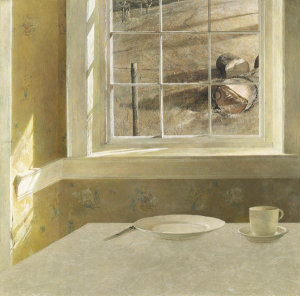
The corridor leading to a light-filled room in the springhouse of a neighboring farm inspired Andrew Wyeth to make this painting. The angles of the architecture, stone water basin, and metal buckets felt timeless to him. In his mind, their forms looked back to the Middle Ages and, at the same time, related to the geometric shapes of Cubism. As he wrote, "I was thrilled to find such abstraction in the every day."
Born in Chadds Ford, Pennsylvania, thirty miles southwest of Philadelphia, Andrew Wyeth (American, 1917–2009) was educated at home and apprenticed to his celebrated father, the painter and illustrator N. C. Wyeth. Famous and successful from an early age, Wyeth proved to be a painter of profound imagination, skill, and staying power across seven turbulent decades. Both admired and criticized for the tenacity of his realist approach and the unabashed emotion in his paintings, he produced some of the most iconic and haunting images of the twentieth century.
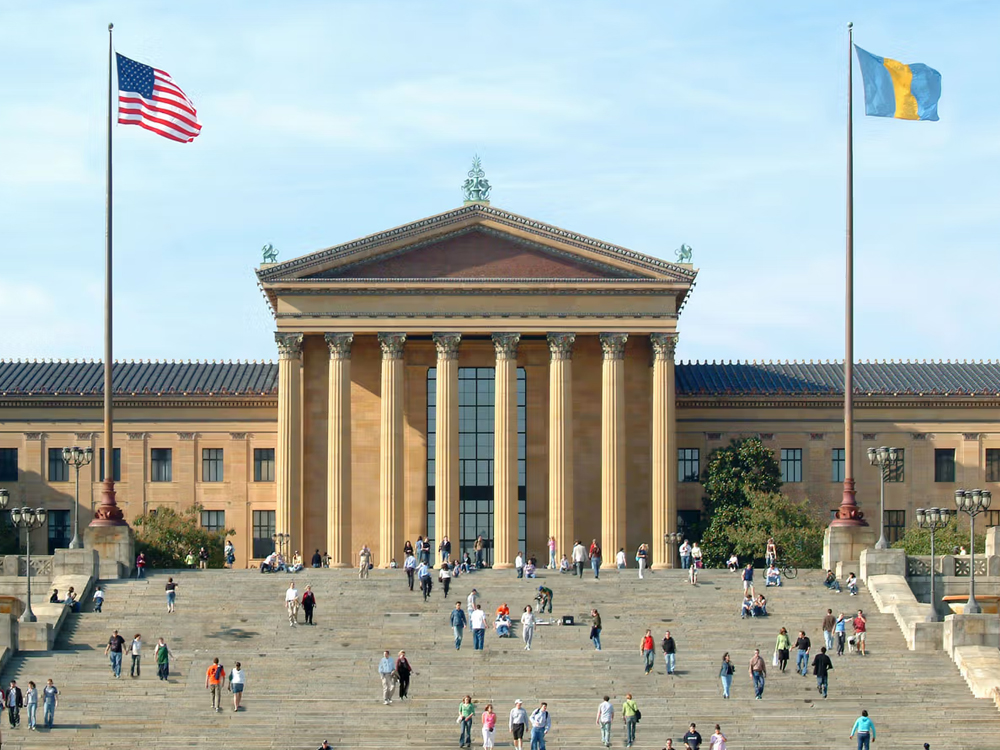
Source: Philadelphia Museum of Art