Made to Order
On-Demand Printing
All products are produced on-demand, in accordance with stringent production protocols designed to ensure consistent and superior quality.

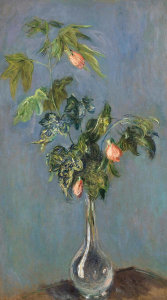
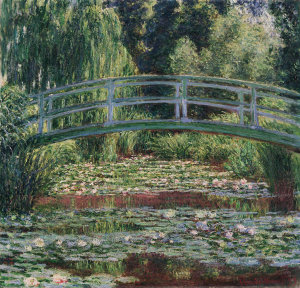
This canvas—one of Claude Monet’s first attempts to capture his garden in paint—derives its composition and vivid hues from the Japanese prints he collected. It marks the beginning of the artist’s thirty-year fascination with the colors of his flowers and plants.
Monet expanded the gardens surrounding his home at Giverny, in northern France, after seeing a Japanese garden and water-lily display at the 1889 world’s fair in Paris. The arched bridge he placed over a new pond may have been suggested by a Japanese gardener (as yet unidentified) who visited him when he was planning the site.
“Monet is only an eye, but by God what an eye!” exclaimed Paul Cézanne (French, 1840–1926) of his friend and fellow artist. In a career spanning nearly seventy years and 2,000 canvases, Monet turned his powers of observation to the natural world around him. Setting up his easel at various locations across France, he wrestled with winds, hot and cold temperatures, and constantly changing atmospheric conditions in his efforts to capture in paint the effects of weather, sunlight, and the seasons on the landscape.
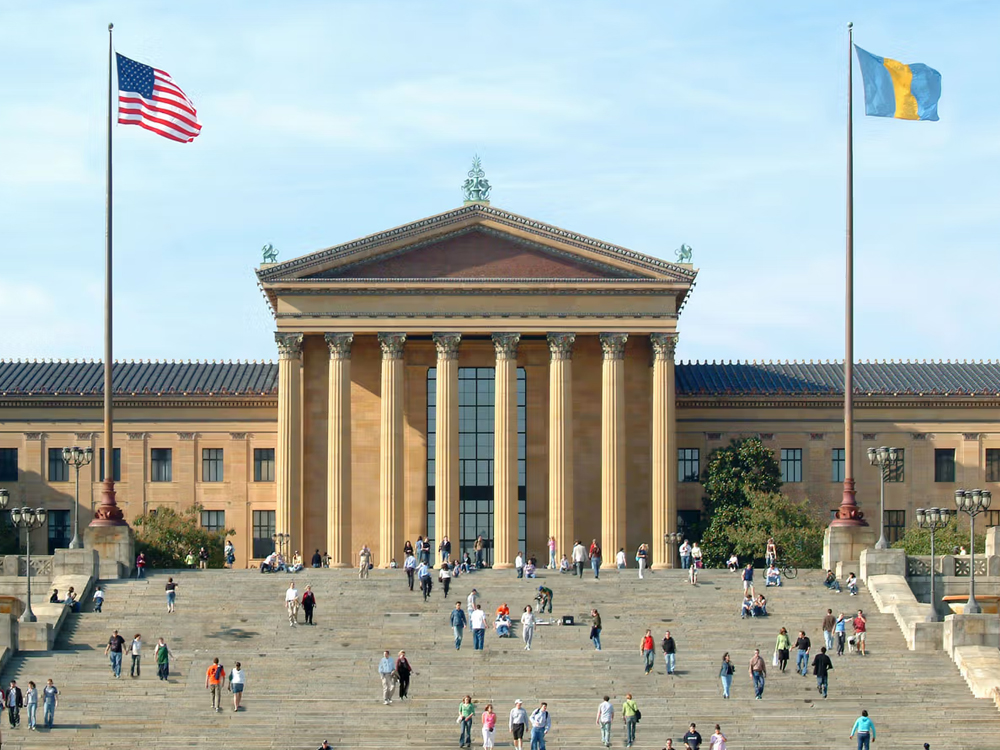
Source: Philadelphia Museum of Art